Project · SiriusXM
Knowledge-Centered Service Learning Initiative
Designing learning that supported a company-wide adoption of Knowledge-Centered Service (KCS).
Overview
SiriusXM contracted me to support the rollout of Knowledge-Centered Service (KCS), a company-wide initiative to improve how knowledge was created, shared, and maintained. My work focused on designing learning experiences, supporting coaches, and helping employees adopt new ways of working.
The project included instructor-led training, virtual facilitation, eLearning, facilitator guides, assessments, and performance support materials, all developed alongside cross-functional stakeholders.
The challenge
In order to reach its full potential, KCS requires a cultural shift across an organization. People are asked to change long-established habits around documenting knowledge, collaborating across teams, and supporting customers. Changes of that scale require more than process training. People need to understand why the change is happening and how it benefits them directly.
My work
- Designed instructor-led, virtual, and self-paced learning experiences.
- Developed facilitator guides, learner materials, job aids, and assessments.
- Facilitated a two-day KCS coaching workshop, adapting delivery in real time based on learner needs.
- Designed content for customer support agents in the Philippines, many of whom spoke English as a second language. I wrote the materials at approximately a fifth-grade reading level to improve accessibility and ensure understanding.
- Advocated for reducing cognitive load when course scope exceeded what learners could reasonably absorb.
Artifacts
Facilitator Deck and Speaker Notes
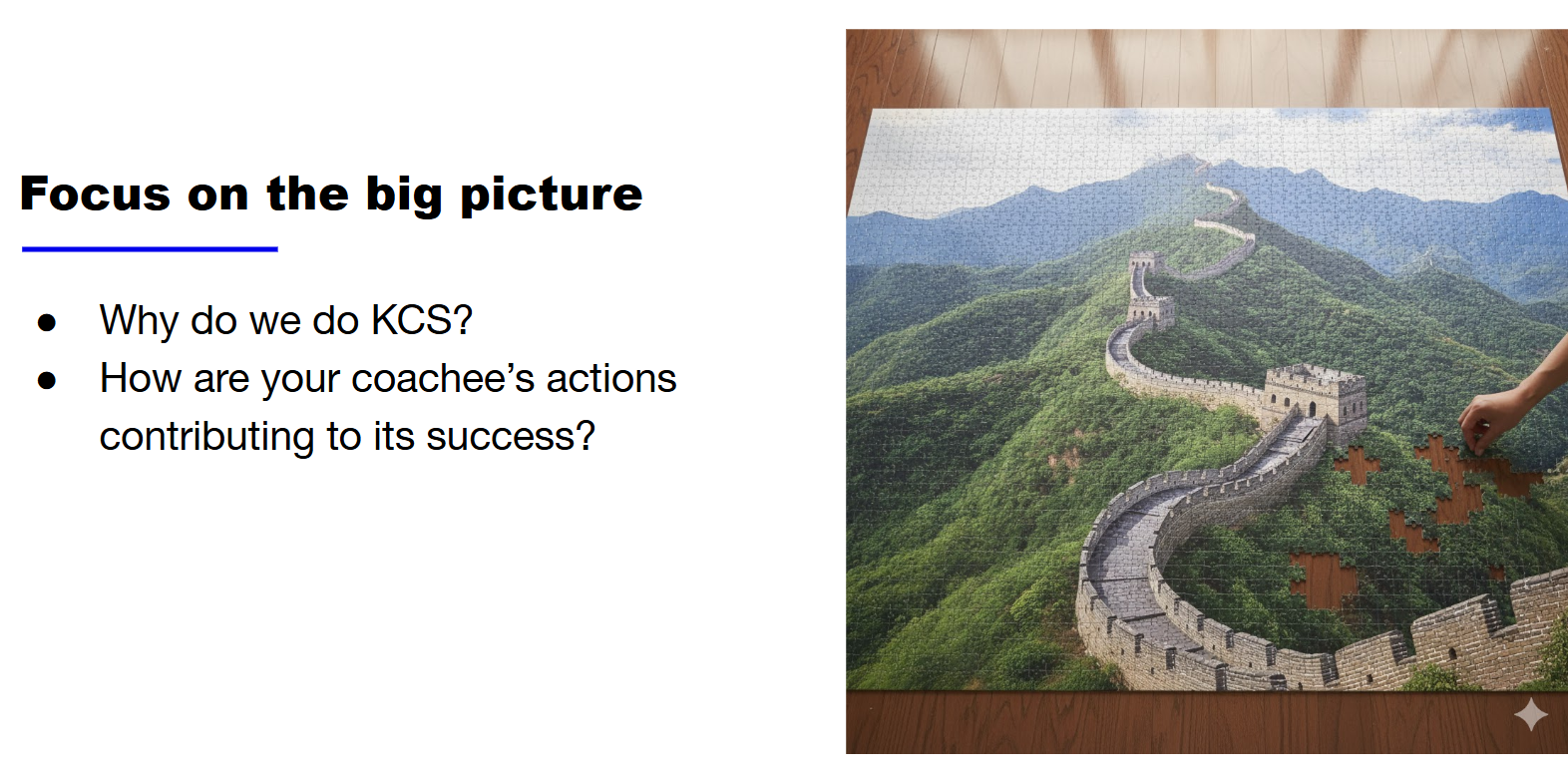
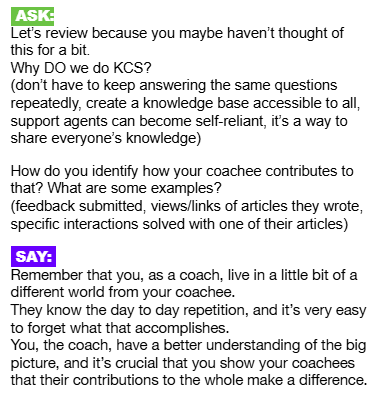
Building from the Learner's Perspective
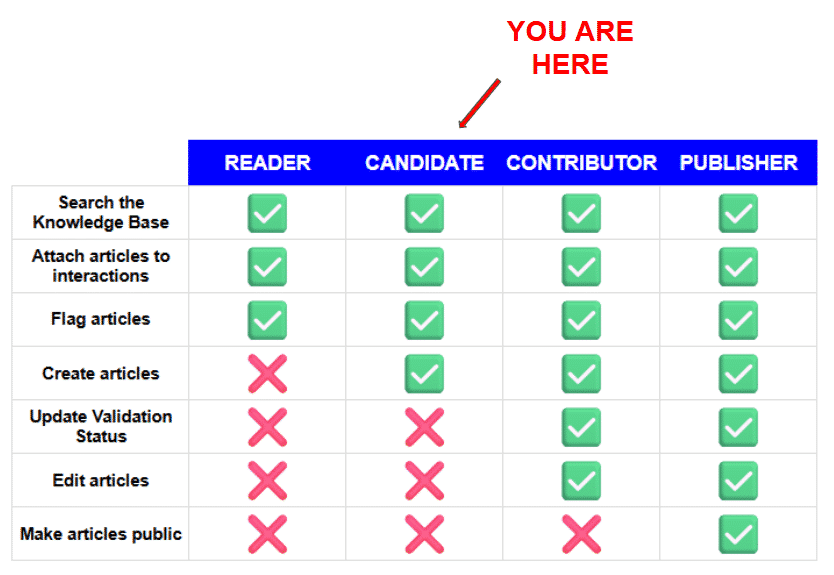
Portfolio note: These examples have been selected to demonstrate instructional decisions without displaying confidential business information.
Reflection
This project reinforced the importance of understanding the audience before designing the solution. In one course, I raised concerns about scope and cognitive load early in development. Learner feedback later validated those concerns and reinforced my belief that good instructional design begins with context: understanding who the learners are, what they already know, and what they need in order to succeed.